
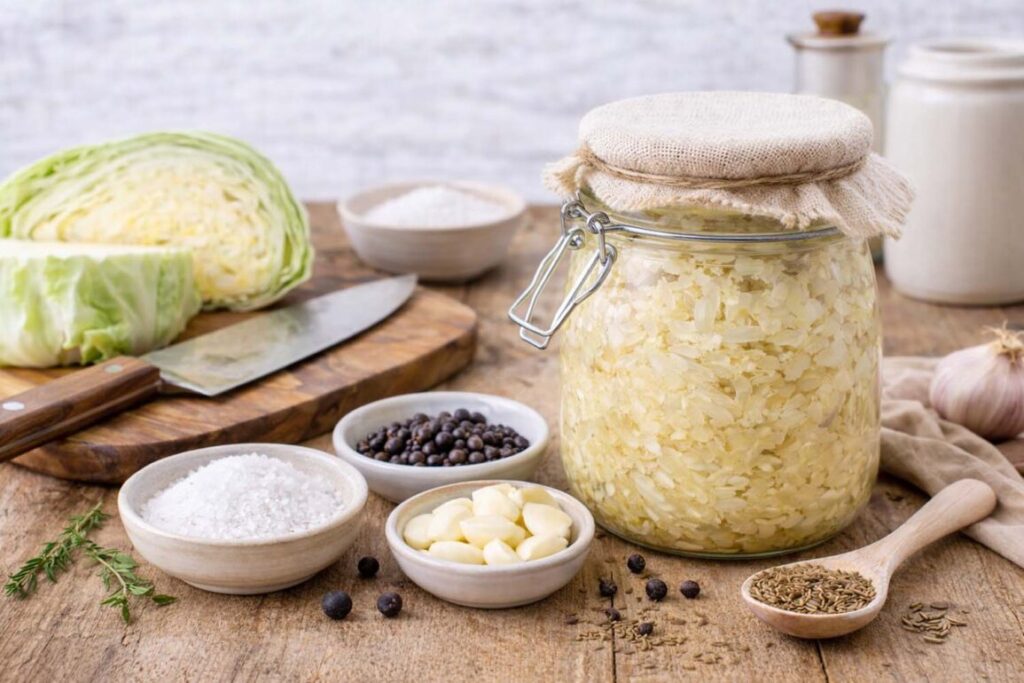
This easy, homemade sauerkraut recipe is one of the simplest and most rewarding ferments you can make. With just cabbage, salt, and time, you can create tangy, probiotic-rich homemade sauerkraut that supports gut health and adds brightness to almost any dish. This guide walks you through the traditional fermentation method, explains the science behind it, and includes a troubleshooting section so you can confidently handle common issues like yeast, mold, and brine problems.
What Is Sauerkraut?
Sauerkraut literally means “sour cabbage” in German. It’s made by fermenting finely shredded cabbage with salt, allowing natural lactic acid bacteria to convert sugars into lactic acid. This fermentation process naturally preserves the cabbage and creates its distinctive sour flavor.
Sauerkraut is one of those rare foods that’s both incredibly simple and surprisingly powerful. At its core, it’s just cabbage and salt, but through natural fermentation, it transforms into a probiotic-rich staple that supports digestion, boosts gut health, and adds brightness to almost any meal.
Cultures around the world have relied on fermented cabbage for centuries, not just for its flavor but for its ability to preserve nutrients and keep vegetables fresh long after harvest.
Why Make Sauerkraut at Home?
Making sauerkraut at home is more than a kitchen project, it gives you complete control over quality, flavor, and nutrition.
Most store-bought versions are convenient, but many are pasteurized or preserved with vinegar, which means they lack the live probiotics that make traditional sauerkraut so beneficial. When you ferment it yourself, you get the full spectrum of living bacteria, a cleaner ingredient list, and the freedom to customize flavors by adding ingredients like garlic, jalapeños, caraway, ginger, or whatever inspires you.
It’s also incredibly cost-effective. A single head of cabbage can yield a jar of sauerkraut that lasts for months, and the process requires no special equipment. All you need is a jar, sea salt, and a bit of patience.
Homemade sauerkraut is not only fresher and more vibrant than most store-bought versions, but also deeply satisfying to create. Once you learn how easy it is to make, you’ll want to keep it as a staple in your home.
Sauerkraut Recipe: Ingredients and Equipment
You only need a few simple ingredients and basic tools to make this traditional sauerkraut recipe at home:
Ingredients
- 1 medium green cabbage (about 2–3 lbs)
- 1.5–2 tablespoons fine sea salt (2–3% of cabbage weight)
- Optional: caraway seeds, garlic, juniper berries, or other flavorings
Equipment
- Large mixing bowl
- Cutting board and sharp knife
- 1 quart-size mason jar or fermentation crock
- Fermentation weight (a smaller jar, glass weight, or water-filled bag)
- Clean cloth or airlock lid
How to Make Sauerkraut: Step-by-Step Instructions
Step 1: Prep the Cabbage
Remove any damaged outer leaves. Quarter the cabbage, remove the core, and slice it into thin shreds. The thinner the slices, the faster and more evenly it ferments. A food processor with a shredding attachment makes this step quick and easy.
Step 2: Salt and Massage
Place shredded cabbage in a large bowl and sprinkle with salt. Massage for 5–10 minutes until:
- The cabbage softens
- It releases enough liquid to form a brine
- The volume reduces significantly
This brine is essential—it protects the cabbage from oxygen and harmful microbes.
Step 3: Pack the Jar
Transfer the cabbage into your jar or crock a handful at a time, pressing firmly to eliminate air pockets. Pour any remaining brine from the bowl over the top. Add filtered water if needed to cover the cabbage completely.
Step 4: Submerge the Cabbage
Place a fermentation weight on top to keep the cabbage fully submerged. This prevents mold and ensures a safe, anaerobic environment.
Step 5: Cover and Ferment
Cover the jar with either a cloth secured with a rubber band or a fermentation lid with an airlock. Place your jar in a cool, dark spot (65–72°F is ideal).
Step 6: Ferment for 1–4 Weeks
Check daily for the first few days:
- Press the weight down if cabbage rises above the brine
- Skim off any harmless surface bubbles
Taste after 7 days. When it reaches your preferred tanginess, move it to the refrigerator to slow fermentation.
How to Know When Sauerkraut Is Ready
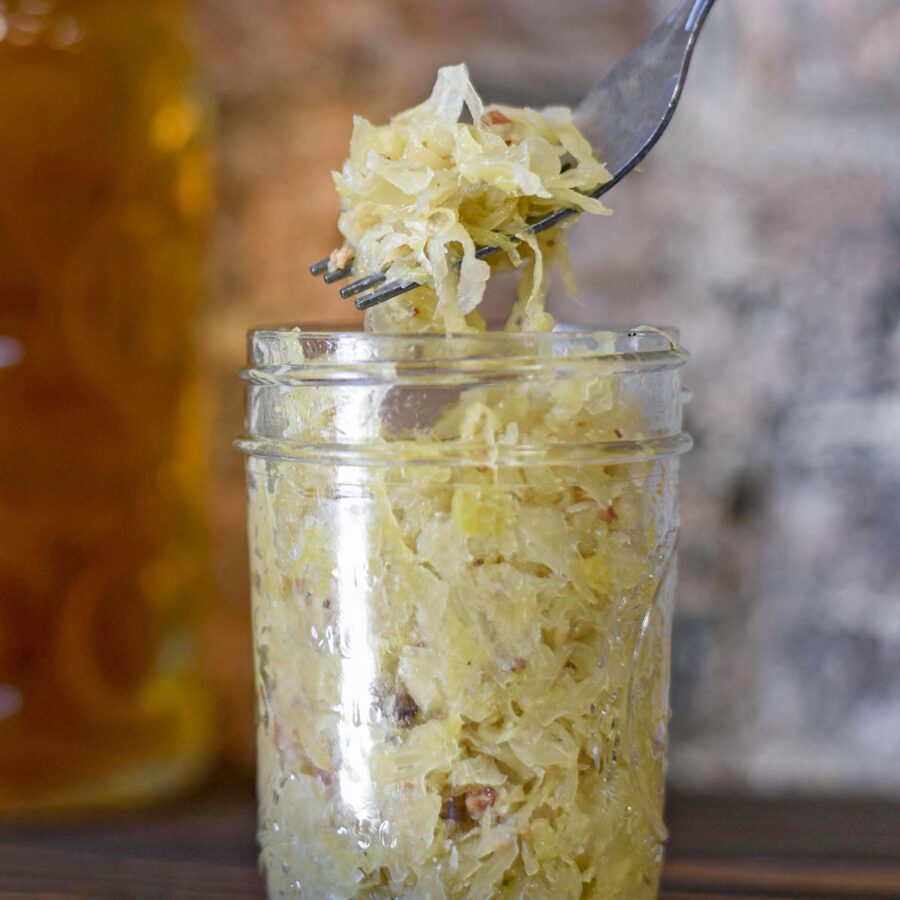
Your sauerkraut is done when:
- It smells pleasantly salty and sour
- It tastes tangy and crisp
- The brine is cloudy (a normal sign of active fermentation)
Longer fermentation creates deeper flavor. Shorter fermentation results in milder kraut. The choice is yours!
Sauerkraut Salt Ratio: How Much Salt to Use
The correct salt ratio is crucial for successful fermentation. Use 2–3% salt by weight of your cabbage.
No Scale Required: Simple Salt Measurement
Use 1½ to 2 teaspoons of fine sea salt per pound of shredded cabbage:
- 1½ tsp per pound ≈ 2% salt: milder flavor, faster ferment
- 2 tsp per pound ≈ 2.5% salt: firmer, crunchier, more mold-resistant
Important: Always use non-iodized sea salt or kosher salt. Iodized table salt can inhibit fermentation.
Troubleshooting Sauerkraut: Common Problems and Solutions
Fermentation is simple, but small issues can pop up. Here’s how to handle them confidently.
1. White/Gray Film on Top (Kahm Yeast)
What it is: Harmless yeast from oxygen exposure.
What to do: Scrape off, clean jar rim, keep cabbage submerged. Safe if smell/taste normal.
2. Mold (Black, Pink, Red, Fuzzy, or Widespread Growth)
What it is: Harmful mold that can produce mycotoxins.
What to do: Discard batch. Do not salvage.
Prevention: Keep cabbage submerged, 2–3% salt, sanitize jars/utensils.
3. Not Enough Brine
Causes: Cabbage too dry, not massaged, low salt.
Fix: Add 2% saltwater (½ tsp per cup) until cabbage submerged.
4. Sauerkraut Is Too Salty
Causes: Excess salt.
Fix: Rinse lightly, replace ½ cup brine with water, use lower 2–3% salt next time.
See also

Lavender Cookies Recipe (Easy Shortbread!)
5. Sauerkraut Is Mushy
Causes: Low salt, warm fermentation, loosely packed cabbage.
Fix: Use firm cabbage, cooler spot, stick to 2–3% salt.
6. Sauerkraut Smells Rotten or “Off”
Signs of spoilage: Rotten/sulfur smell, slimy, brown/discolored cabbage.
Fix: Discard batch, start fresh with clean equipment and proper salt.
6 Tips for Perfect Sauerkraut Every Time
Follow these tips to ensure sauerkraut success:
- Use fresh, dense cabbage, it will have more water and produce more brine
- Keep everything clean but not sterile (fermentation needs natural bacteria)
- Maintain a cool, stable temperature (65–72°F)
- Always keep cabbage fully submerged under brine
- Taste regularly. Fermentation is flexible and forgiving
- Start with small batches until you’re comfortable with the process
How to Store Homemade Sauerkraut
Once your sauerkraut reaches your desired level of tanginess, transfer it to the refrigerator. The cold temperature slows fermentation significantly, allowing your sauerkraut to maintain its flavor and texture for several months.
Always use clean utensils when serving to prevent contamination. Properly stored sauerkraut can last 4–6 months in the refrigerator, though it’s often eaten much sooner!